
Before the 16th century came around most garments were variations of drapes and throws with beautiful details and embroidery but without much shape or fit to the body.
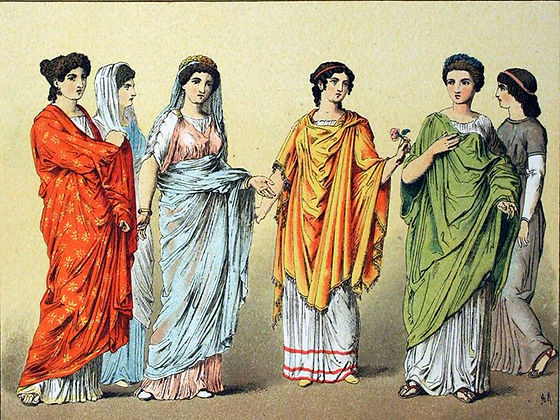

However soft draped lines began to disappear as the century went on. Throughout the 1500’s women’s dress had two matches n parts which were a bodice and a skirt. Sleeves were often times separate as well. The gradual move from clothing that draped over the body to clothing that shaped it was complete.
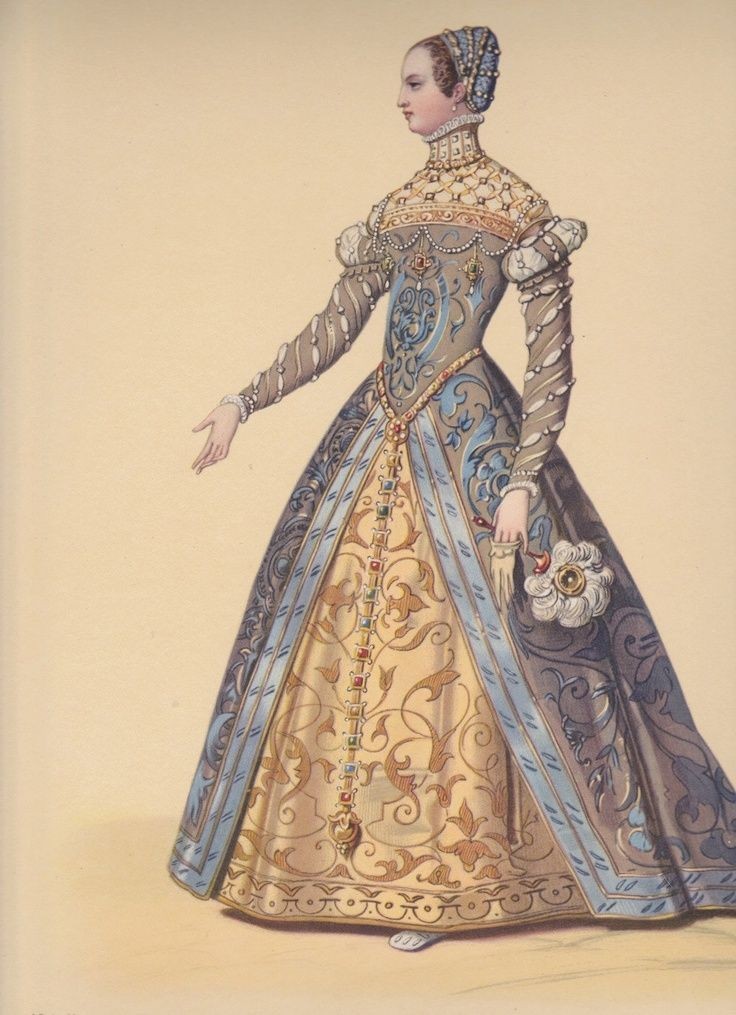
Only outer robes and coats remained waistless. Full skirts widened with gathered and pleated waistlines. Outer skirts were opened up to reveal a petticoat or forepart underneath.
The Spanish farthingale created a bell shape and defined the century’s silhouette. Bodices became smooth and fitted by adding stiff materials inside. While the torso straightened, sleeves grew larger and more elaborate.

At the start of the sixteenth century, women dressed as they had for much of the fifteenth century, though changes were slowly introduced. The foundation of a woman’s outfit was her smock/shift/chemise, which was made of linen and easily washed. Blackwork or other colored embroidery was commonly applied to chemise necks, fronts, and wrists.

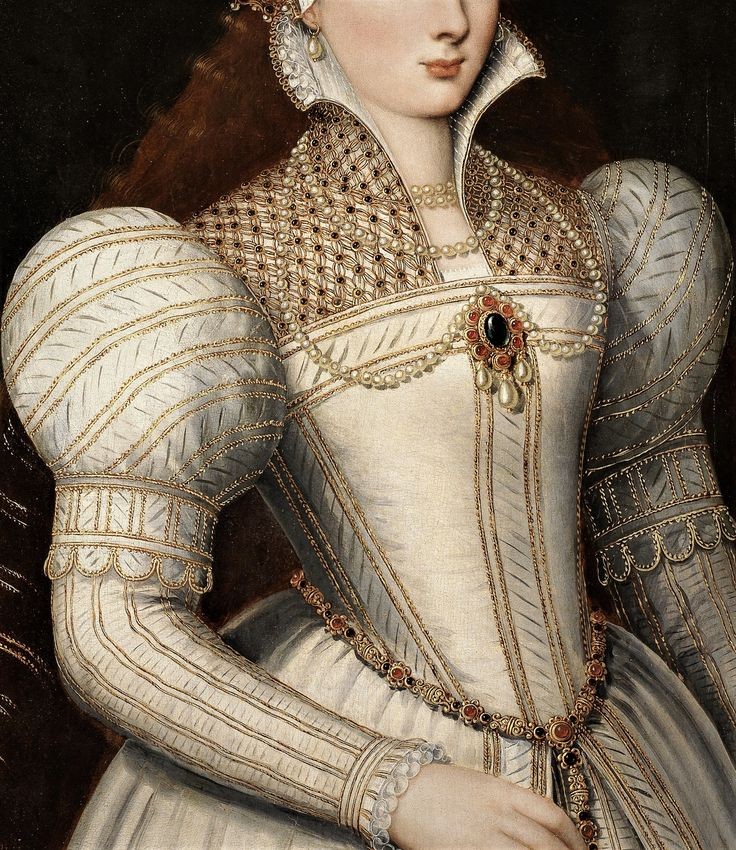
Beneath every elaborate gown a linen undergarment was worn next to the skin. These undergarments are what we refer to now as shirts, but in medieval times were referred to as smocks, shifts, and chemise in French which was an essential layer because it could be easily washed and protected the outer garments which were never washed. The more the under linen shirt would be revealed in certain garments the more elaborate and decorative the linen shirt became.

Fashion in the first decade of the sixteenth century largely continued the trends of the 1490s, but with a growing Italian influence on men’s and womenswear producing a broader silhouette, as well as an increasing presence of slashing on men’s garments.

At the start of the sixteenth century, the first layer a man would put on would be his linen shirt or chemise, which in this period was nearly always visible and gathered at an often-ornamented neckband. Doublets were collarless, cut square and low. Sleeves were often of a finer fabric than the body as they were more visible when wearing a gown. Jerkins, often skirted, were worn over the doublet (it is often difficult to distinguish the two in portraits). Gowns, worn over doublets/jerkins, were broad-shouldered and loose, open down the front, with a large turned back collar that broadened over the shoulders and was usually fur lined. Legs were covered in hose ending at the knee, with the two legs joined by a codpiece, netherhose or stockings were worn below, supported by garters.


XoXo – Style Diversity
 Style Diversity